Global identification & prevention guideTermites
Isoptera
Recognize termite swarmer activity, mud tubes, and structural wood protection steps.
Overview
Termites cause extensive structural damage by consuming cellulose inside wood. Subterranean termites construct underground nests and travel through mud tubes to access wooden building components.
Identification
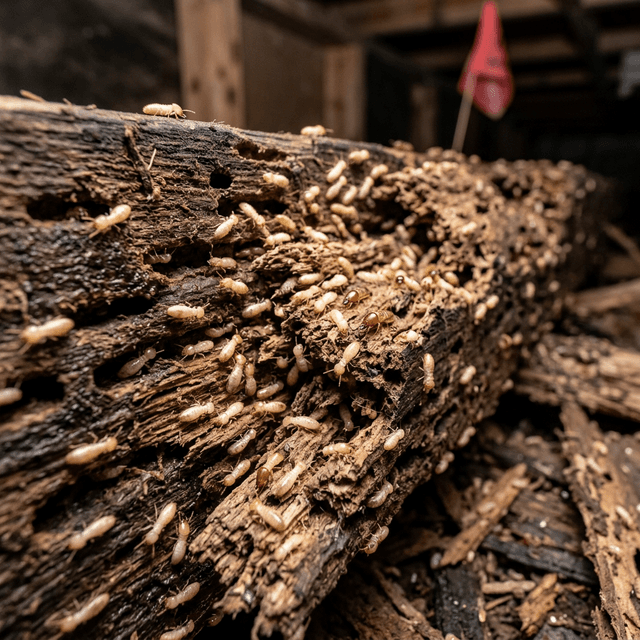
Workers: small (3 to 4 mm), creamy white, soft-bodied, eyeless
Swarmers: dark brown or black with two equal-length wing pairs
Soldiers: enlarged orange head with prominent mandibles
Mud tubes: pencil-width soil tubes built on foundation surfaces
Shed swarmer wings found near windows and door sills
Behavior & Habitat
Subterranean termite colonies live in soil and require moisture. They build mud tubes over concrete foundations to reach wood framing, consuming lumber from the inside out.
Warning Signs
- •Shelter mud tubes on foundation walls or floor joists
- •Hollow or papery sound when wood framing is tapped
- •Discarded transparent wings near light sources in spring
- •Blistered or bubbling paint over wooden trim
- •Frass or fine wood powder near exit holes
Prevention Tips
- Eliminate direct wood-to-soil contact around foundations
- Redirect downspouts and slope soil away from foundation walls
- Repair plumbing leaks in crawlspaces and basements promptly
- Store firewood elevated off the ground and away from walls
- Schedule annual professional termite inspections
Treatment Approaches
Termite eradication includes soil liquid termiticide barriers, bait monitoring stations, and targeted wood preservative treatments.
Use this guide safely
- Confirm the insect before treating
- Read product labels
- Keep treatments from children and pets
- Check local regulations
- Monitor after treatment