
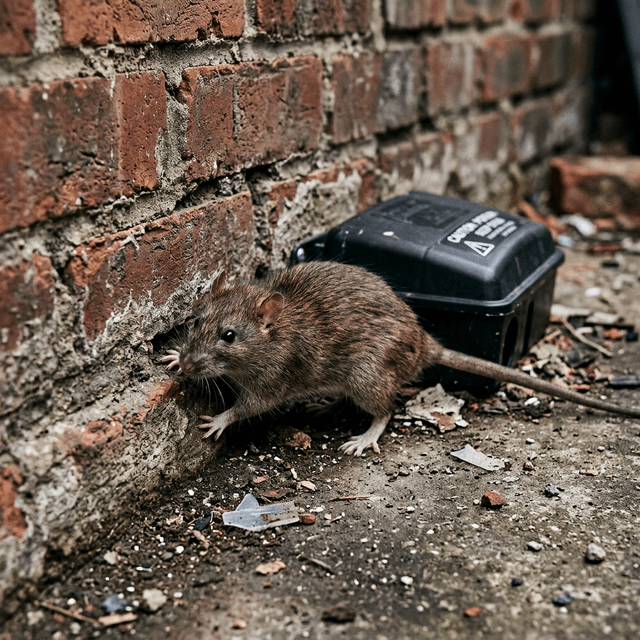
Global identification & prevention guideRodents
Rodentia
Identification, structural exclusion sealing, and trapping techniques for house mice and rats.
Overview
Mice and rats are common structural pests. House mice, Norway rats, and roof rats gnaw through building materials, contaminate food supplies, and carry transmissible pathogens.
Identification
House mouse: 3 to 4 inch body, gray-brown fur, large ears
Norway rat: 7 to 10 inch body, heavy brown-gray fur, blunt nose
Roof rat: 6 to 8 inch body, dark fur, pointed nose, tail longer than body
Mouse droppings are small and pointed; rat droppings are capsule-sized
Gnaw marks present on wood, drywall, plastic, and wiring
Behavior & Habitat
Rodents are nocturnal and squeeze through small structural gaps: mice enter through dime-sized holes, rats through quarter-sized gaps. They gnaw continuously to wear down incisor teeth and nest in insulation or wall voids.
Warning Signs
- •Droppings found along walls, in pantries, or under sinks
- •Gnaw marks on food boxes, baseboards, and wires
- •Scurrying or scratching sounds inside walls and ceilings
- •Dark grease marks along baseboard travel routes
- •Shredded paper or insulation used for nesting
Prevention Tips
- Seal exterior gaps larger than 1/4 inch with steel wool and sealant
- Store dry goods in heavy glass or metal containers
- Keep outdoor trash in covered, rigid containers
- Trim tree limbs back at least 6 feet from rooflines
- Keep basements, attics, and storage zones clutter-free
Treatment Approaches
Effective rodent control relies on structural exclusion (sealing entry points), strategic trapping along active runways, and strict sanitation improvements.
Use this guide safely
- Confirm the insect before treating
- Read product labels
- Keep treatments from children and pets
- Check local regulations
- Monitor after treatment