
🐛
Global identification & prevention guideCentipedes
Chilopoda
Understand house centipede habits, prey reduction, and basement moisture control.
Overview
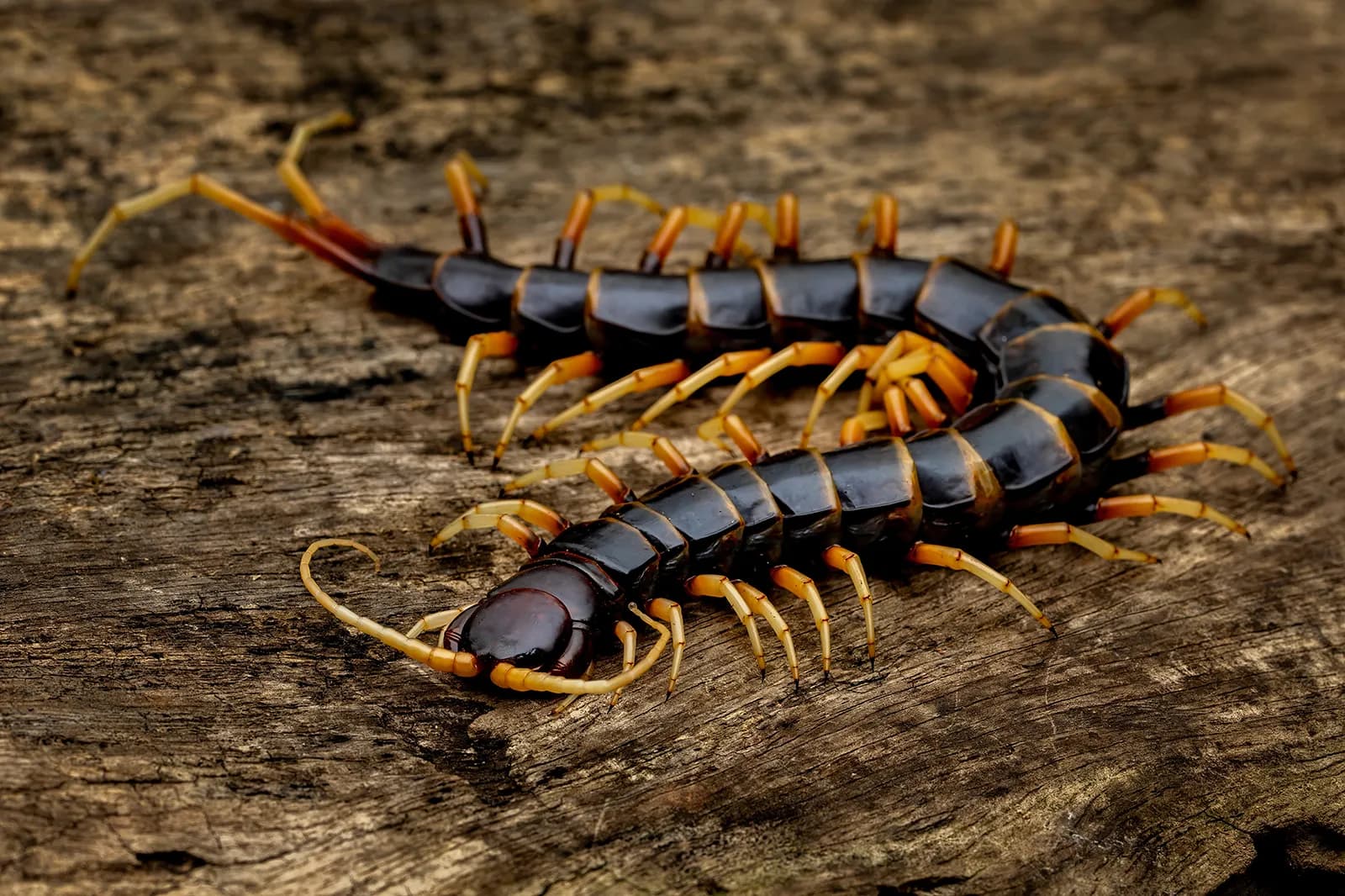
House centipedes are fast-moving arthropods that hunt other insects in damp basements and bathrooms. While intimidating, they do not damage structural materials.
Identification
Elongated body with 15 pairs of long, striped legs in adults
Yellowish-gray body with three dark longitudinal stripes
Long delicate antennae and long hind leg pair
Extremely fast movement across walls and floors
Behavior & Habitat
Centipedes are nocturnal predators that hunt spiders, silverfish, and small insects. They depend on humid environments to prevent desiccation.
Warning Signs
- •Live centipedes seen moving quickly across basement floors or walls
- •Centipedes found trapped in bathtubs or deep sinks
- •Frequent sightings during humid or rainy weather
- •Presence of underlying insect prey populations in lower levels
- •High humidity or dampness in crawlspaces and basements
Prevention Tips
- Repair basement foundation dampness and water seepage
- Run dehumidifiers in lower levels to maintain low humidity
- Seal gaps around foundation walls, floor drains, and pipes
- Clear leaf litter and organic mulch away from exterior walls
- Eliminate secondary insect populations that serve as prey
Treatment Approaches
Centipede management centers on moisture reduction, sealing entry gaps, and controlling secondary pest insects.
Inspect firstUse integrated methodsFollow product labelsRepeat checks
Use this guide safely
- Confirm the insect before treating
- Read product labels
- Keep treatments from children and pets
- Check local regulations
- Monitor after treatment
Need immediate help? Call us now:(888) 217-8017