
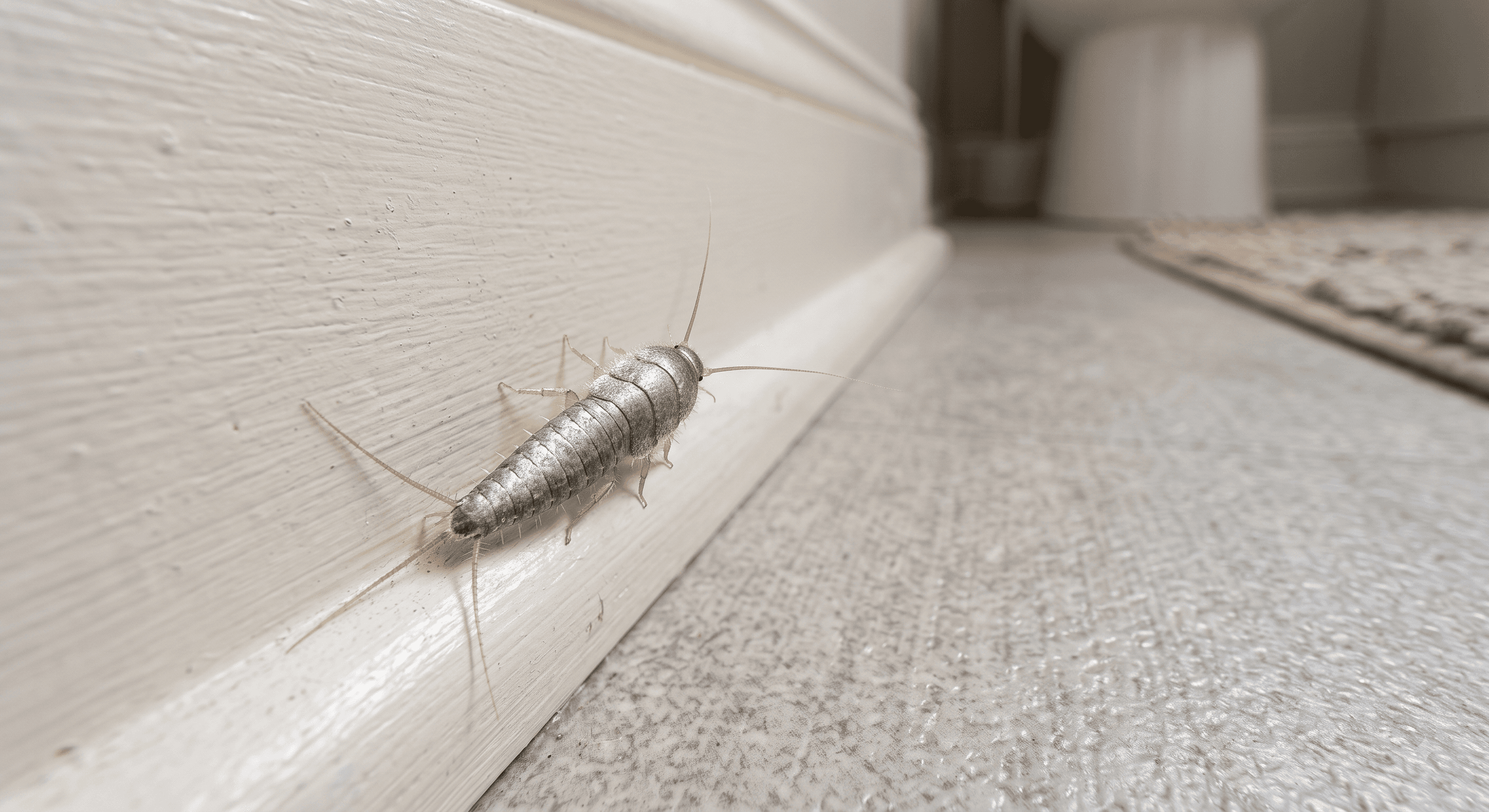
Why Are Silverfish Attracted to Moisture?
Silverfish are commonly found in damp, humid areas because they are adapted to environments where moisture is readily available. Learn why humidity attracts them.
Global Pest Library Research Team
Global Pest Library
Silverfish are commonly found in damp, humid areas because they are adapted to environments where moisture is readily available. If you keep finding silverfish in a bathroom, basement, laundry room, kitchen, or another humid part of your home, moisture may be one of the reasons they are staying there.
Silverfish do not need standing water to survive. Instead, they tend to prefer environments with higher humidity and moisture because these conditions help reduce water loss and often provide suitable shelter and food sources.
Finding silverfish in a damp area does not necessarily mean you have a major infestation. However, repeated sightings can be a useful indication that the area has moisture or humidity conditions worth investigating.
Do Silverfish Need Moisture to Survive?
Silverfish need access to moisture because they are vulnerable to drying out.
Unlike many household pests that can tolerate relatively dry conditions, silverfish generally do better in humid environments. Moisture helps them maintain the water balance they need to survive.
This is why silverfish are often associated with bathrooms, basements, crawl spaces, and other areas where humidity remains elevated.
However, saying that silverfish “need water” can be misleading. They do not need to live directly in standing water. A humid environment, damp material, condensation, or a nearby moisture source can be enough to create favorable conditions.
Why Do Silverfish Like Humid Areas?
Humidity provides an important environmental advantage for silverfish.
Their bodies can lose moisture when exposed to dry conditions. In a humid environment, that moisture loss is reduced, making it easier for silverfish to remain active and survive.
Humid areas can also provide other things silverfish need.
A damp bathroom may offer dark gaps around plumbing. A humid basement may contain cardboard, paper, or other materials that can provide food or shelter. A laundry room may have condensation and numerous concealed spaces.
In other words, moisture is often only one part of the environment that makes an area attractive to silverfish.
Where Do Silverfish Find Moisture Inside a House?
Silverfish can take advantage of many relatively small moisture sources.
Common locations include:
- Bathrooms
- Under kitchen and bathroom sinks
- Around leaking pipes
- Near toilets and plumbing fixtures
- Laundry rooms
- Basements
- Crawl spaces
- Attics with moisture problems
- Areas affected by condensation
- Around poorly ventilated bathrooms
- Damp storage areas
- Locations with water damage
A visible leak is not always necessary.
Persistent humidity can create favorable conditions even when there is no obvious water source. For example, a bathroom may appear dry but still have elevated humidity after showers if the ventilation is inadequate.
Can High Humidity Cause Silverfish?
High humidity does not create silverfish by itself.
Silverfish have to get into the building or already be present somewhere on the property. However, humid conditions can make an indoor environment more suitable for them.
This distinction is important.
If silverfish are already present, reducing humidity can make the environment less favorable. But lowering humidity alone may not immediately eliminate an established population.
Other factors, including available food, shelter, cracks, wall voids, and entry points, can also contribute to silverfish activity.
What Humidity Level Attracts Silverfish?
Silverfish generally favor humid conditions, but there is no single indoor humidity number that guarantees silverfish will appear.
The overall environment matters.
Persistently high relative humidity can provide more favorable conditions than a consistently dry indoor environment. A damp basement, poorly ventilated bathroom, or area affected by condensation may therefore be more likely to support silverfish activity.
Rather than focusing on one exact humidity threshold, look for persistent moisture problems.
If an area feels consistently damp, develops condensation, has a musty smell, or has a history of leaks or water damage, it is worth investigating.
Why Are Silverfish Suddenly Appearing in a Damp Area?
If silverfish suddenly become noticeable in a particular room, look for a recent change in moisture or environmental conditions.
Possible causes include:
- A plumbing leak
- Increased indoor humidity
- Seasonal changes in humidity
- Poor bathroom ventilation
- New condensation
- Water damage
- Damp cardboard or stored materials
- A previously hidden moisture problem
A small leak behind a cabinet or beneath a sink can create a localized area that remains favorable to silverfish.
Likewise, a basement that becomes more humid during a particular season may provide better conditions for activity.
The sudden appearance of silverfish can therefore be a reason to inspect the surrounding area for moisture rather than simply treating the insects you can see.
Why Are Silverfish Commonly Found in Bathrooms?
Bathrooms can provide several conditions silverfish prefer.
Showers and baths temporarily increase humidity. Plumbing fixtures create concealed gaps and protected spaces. Bathrooms also tend to have dark areas underneath cabinets, around pipes, and behind fixtures.
Poor ventilation can make the problem worse by allowing moisture to remain in the room for longer periods.
If you regularly find silverfish in your bathroom, check whether the room dries properly after showers and whether the exhaust fan is functioning effectively.
Also inspect areas around sinks, toilets, tubs, and pipes for leaks or persistent dampness.
Why Are Silverfish Found in Basements?
Basements can be attractive to silverfish because they may combine moisture, darkness, shelter, and stored materials.
Humidity can remain elevated in poorly ventilated basements, particularly when there are foundation moisture problems, condensation, plumbing leaks, or inadequate drainage.
Cardboard boxes and paper products stored directly on basement floors can also provide additional shelter and potential food sources.
If silverfish are concentrated in a basement, investigate both the humidity and the way materials are being stored.
Do Silverfish Live in Damp Walls?
Silverfish can hide in wall voids, cracks, and other concealed spaces, particularly when those areas provide suitable humidity and protection.
A damp wall can therefore contribute to favorable conditions, but silverfish are not necessarily living inside every wall where moisture is present.
If silverfish repeatedly emerge from a specific wall, cabinet, ceiling area, or plumbing penetration, investigate the location for moisture, gaps, and other potential hiding spaces.
Persistent dampness inside a wall should also be addressed because moisture damage can create problems beyond pest activity.
Does a Dehumidifier Help With Silverfish?
A dehumidifier can help make an indoor environment less favorable to silverfish when excessive humidity is contributing to the problem.
It is particularly useful in areas such as basements, storage rooms, and other spaces that remain humid despite normal ventilation.
However, a dehumidifier is not a complete silverfish treatment.
If there is an active plumbing leak, water intrusion, condensation problem, or another source of moisture, that underlying problem should be corrected as well.
Reducing humidity works best as part of a broader approach that also addresses food sources, shelter, entry points, and hiding places.
How to Reduce Moisture and Make Your Home Less Attractive to Silverfish
If moisture is contributing to silverfish activity, start by identifying where the moisture is coming from.
Repair leaking pipes and fixtures as soon as possible. Improve ventilation in bathrooms and laundry areas. Use a dehumidifier in persistently humid rooms when appropriate.
You should also:
- Dry wet areas promptly.
- Address condensation around windows and pipes.
- Check under sinks for slow leaks.
- Improve airflow in poorly ventilated rooms.
- Remove damp cardboard and paper storage.
- Keep stored materials off damp floors.
- Inspect basements and crawl spaces for moisture problems.
- Seal cracks and gaps where silverfish may hide.
- Investigate recurring water damage.
These steps can make the environment less favorable for silverfish and may reduce activity over time.
Does Killing Silverfish Fix a Moisture Problem?
No.
Killing the silverfish you see does not remove the environmental conditions that may be supporting them.
If an area remains humid and provides food and shelter, other silverfish may continue to survive there.
This is why repeated sightings should be treated as a potential environmental clue.
For example, finding a silverfish beside a bathroom sink may be less important than discovering that the cabinet underneath has a slow plumbing leak. Correcting the leak addresses one of the conditions that could be supporting the insects.
What Silverfish Moisture Problems Should You Look For?
When investigating silverfish activity, look beyond obvious puddles or leaks.
Moisture problems can be subtle. Check for condensation, damp building materials, slow plumbing leaks, humid storage spaces, poor ventilation, and areas that do not dry properly.
Pay particular attention when silverfish are repeatedly found in the same location.
A pattern of sightings can help identify the environmental conditions involved. If they consistently appear in a bathroom, basement, or under-sink cabinet, inspect that area first.
Silverfish and Moisture: The Connection
Silverfish are attracted to environments where moisture and humidity make survival easier. That is why damp rooms and humid parts of a home are common places to encounter them.
But moisture is only one piece of the puzzle.
Silverfish also need shelter and access to suitable food. A humid room with numerous cracks, cardboard, paper, and undisturbed storage provides a much more favorable environment than a clean, dry, well-ventilated room.
If you repeatedly find silverfish, correcting moisture problems is an important first step. If activity continues after moisture and humidity have been addressed, a more thorough inspection can help identify where the silverfish are hiding and how they are accessing the property.
For a broader overview of silverfish identification, behavior, prevention, and control, see our silverfish pest guide.
Frequently Asked Questions
Why are silverfish attracted to moisture?
Do silverfish like humidity?
Can high humidity cause silverfish?
Do silverfish live in damp walls?
Does a dehumidifier help with silverfish?
What humidity level is bad for silverfish?
Why are silverfish in my bathroom?
Why are silverfish in my basement?
Can fixing a leak get rid of silverfish?
How do I reduce moisture to prevent silverfish?
Explore Pest Identification Guides
Global Pest Library provides independent, evidence-based research articles to help you identify household pests and understand safety protocols.
Explore Our Pest Library
Identify household pests and learn about evidence-based prevention options.
Bed Bugs
Comprehensive research and multi-lingual guidance for identifying, preventing, and preparing for bed bug eradication.
Learn more →
Ants
From pavement ants to carpenter ants, identify ant species and locate nests at their source.
Learn more →
Cockroaches
Identify cockroach species and understand gel baits, IGRs, and sanitation protocols.
Learn more →
Mosquitoes
Larval source reduction and barrier treatment strategies to protect outdoor areas.
Learn more →