What Is a Firebrat?
Learn what a firebrat is, what it looks like, why it is attracted to heat sources, how it differs from silverfish, signs of infestation, and prevention tips.
Global Pest Library Research Team
Global Pest Library
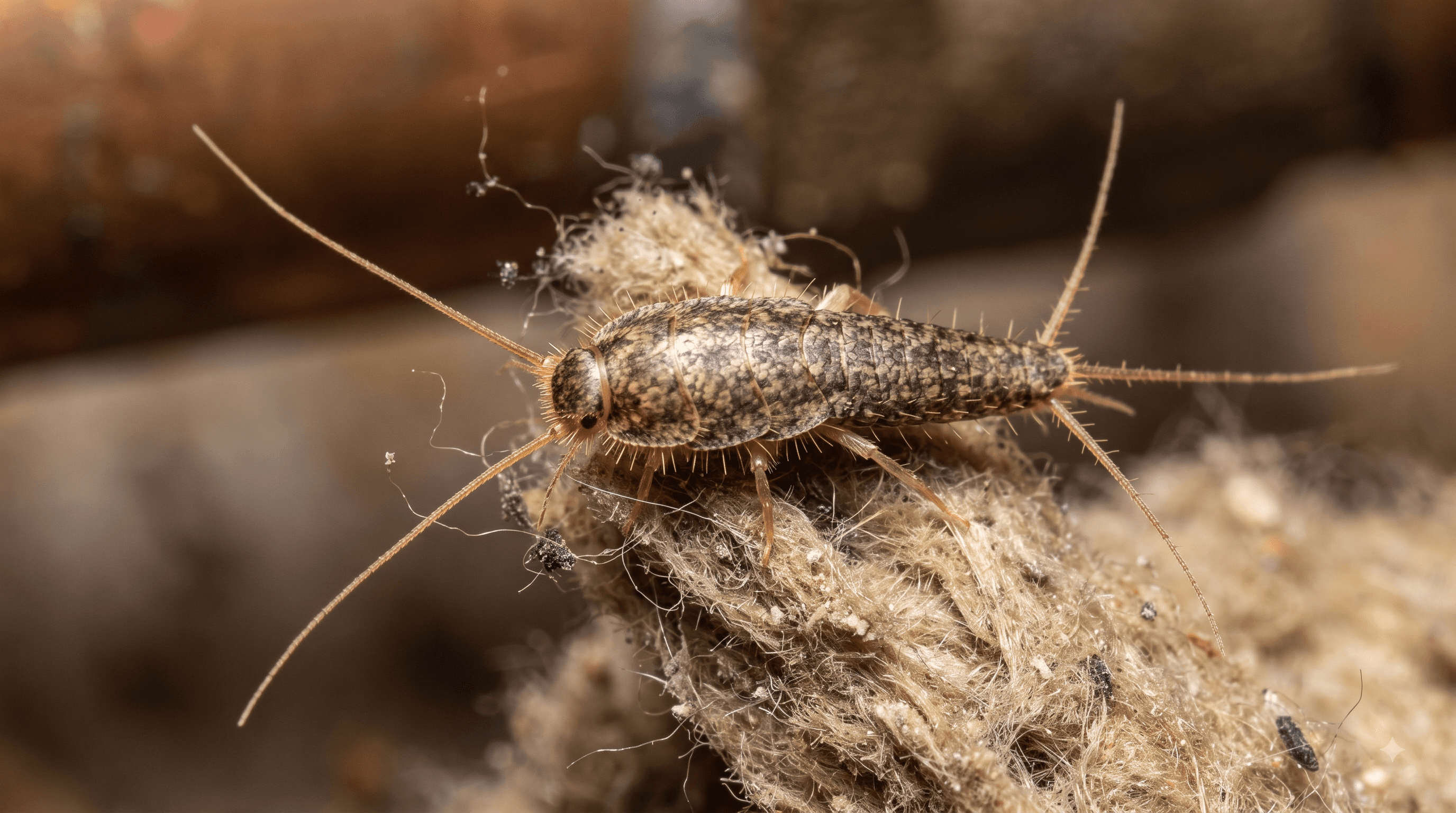
A firebrat is a small, wingless household insect that belongs to the same group as silverfish. It has a flattened, tapered body, long antennae, and three bristle-like appendages at the rear. Firebrats are usually gray, brown, or mottled in color and are best known for living in warm, humid areas.
Unlike silverfish, which tend to prefer cooler, damp environments, firebrats are commonly associated with heat sources such as furnaces, boilers, ovens, fireplaces, and hot-water pipes.
What Does a Firebrat Look Like?
Firebrats are small insects that typically grow to around ½ inch long. Their bodies are flattened and gradually taper toward the rear.
The easiest features to recognize are:
- Color: Gray, brown, tan, or yellowish-brown
- Body: Flattened and tapered
- Markings: Often darker and mottled rather than uniformly silver
- Wings: None
- Antennae: Two long antennae
- Tail: Three long, bristle-like appendages
- Movement: Fast and darting
Their appearance is very similar to silverfish, which is why the two insects are frequently confused.
The mottled, darker appearance of a firebrat is one of the more useful visual clues when trying to distinguish the two.
Why Is It Called a Firebrat?
The name “firebrat” refers to the insect's strong association with warm environments.
Firebrats are often found around sources of heat, including furnaces, boilers, ovens, fireplaces, and hot-water pipes. They can tolerate temperatures that would generally be less suitable for silverfish.
This preference for warmth is one of the most useful clues when identifying a firebrat in a home.
Where Do Firebrats Live?
Firebrats prefer warm, humid, sheltered areas where they can find food and protection.
Inside a home, they may be found around:
- Furnaces and heating equipment
- Boilers
- Water heaters
- Ovens
- Fireplaces
- Hot-water pipes
- Warm utility rooms
- Insulated wall spaces
- Dark cracks and crevices
They are generally difficult to spot during the day because they can remain hidden in narrow spaces and become more active at night.
What Do Firebrats Eat?
Firebrats feed on a variety of materials containing carbohydrates and starches. Their food sources can include paper, book bindings, cardboard, wallpaper, glue, and some stored food products.
They can also feed on materials containing natural starches and other organic compounds.
Although firebrats are small, their feeding can damage valuable or delicate materials when they are present in sufficient numbers.
Do Firebrats Damage Books and Paper?
They can.
Firebrats may feed on paper products, book bindings, wallpaper, cardboard, and other materials containing starches or carbohydrates. Damage can appear as irregular holes, scraped surfaces, or feeding marks along edges.
If you discover unexplained damage to books, papers, wallpaper, or stored cardboard and also notice small, fast-moving insects nearby, firebrats are one possibility to consider.
Firebrat vs. Silverfish: What Is the Difference?
Firebrats and silverfish are closely related and have a very similar body shape. Both are wingless, flattened insects with long antennae and three tail-like appendages.
The main differences are appearance and habitat.
| Feature | Firebrat | Silverfish |
|---|---|---|
| Color | Gray or brown with mottled markings | Usually silvery or pearl gray |
| Body | Flattened and tapered | Flattened and tapered |
| Temperature | Prefers very warm conditions | Prefers cooler conditions |
| Humidity | Prefers humid areas | Prefers humid areas |
| Common locations | Furnaces, boilers, ovens, hot pipes | Bathrooms, basements, closets |
| Wings | None | None |
If you find a dark, mottled insect near a furnace or another warm, humid area, a firebrat may be more likely. If you find a silvery insect in a cooler, damp area such as a basement or bathroom, silverfish may be more likely.
Because these insects can be difficult to identify from a quick glimpse, consider their color, markings, body shape, and location together rather than relying on one characteristic.
Are Firebrats Dangerous?
Firebrats are not considered dangerous to people. They do not sting or bite people and are not known for transmitting diseases to humans.
The main concern with firebrats is property and material damage. When populations become established, their feeding can affect books, paper products, wallpaper, cardboard, and other materials.
Their presence can also indicate that a warm, humid area is providing suitable conditions for them.
What Are the Signs of Firebrats?
Because firebrats are small and often hide, you may notice evidence of their activity before finding the insects themselves.
Possible signs include:
- Repeated sightings of small, mottled insects
- Firebrats appearing around warm equipment
- Damage to paper, books, wallpaper, or cardboard
- Shed skins in hidden areas
- Small stains or droppings
- Activity at night
- Firebrats appearing repeatedly in warm, humid locations
One sighting does not necessarily mean there is a large infestation. Repeated sightings or multiple signs are more significant.
How Do You Get Rid of Firebrats?
The first step is identifying why firebrats are present.
Look for warm, humid areas where they can hide and find food. Reducing unnecessary moisture, improving ventilation, removing clutter, and sealing cracks and gaps can make the environment less suitable for them.
If firebrats continue to appear despite addressing favorable conditions, a professional inspection can help determine where they are hiding and whether a larger population is present.
What Is the Difference Between a Firebrat and a Silverfish?
The simplest distinction is this: firebrats prefer heat, while silverfish generally prefer cooler, humid environments.
Firebrats are usually darker and more mottled, while silverfish typically have a more uniform silvery-gray appearance.
If you are unsure which insect you have, compare both its appearance and the location where you found it.
For a more detailed look at firebrat identification, behavior, signs, prevention, and control, see our complete firebrat pest guide.
Frequently Asked Questions
What is a firebrat?
What does a firebrat look like?
How is a firebrat different from a silverfish?
Are firebrats dangerous?
Where are firebrats found in a house?
Explore Pest Identification Guides
Global Pest Library provides independent, evidence-based research articles to help you identify household pests and understand safety protocols.
Explore Our Pest Library
Identify household pests and learn about evidence-based prevention options.
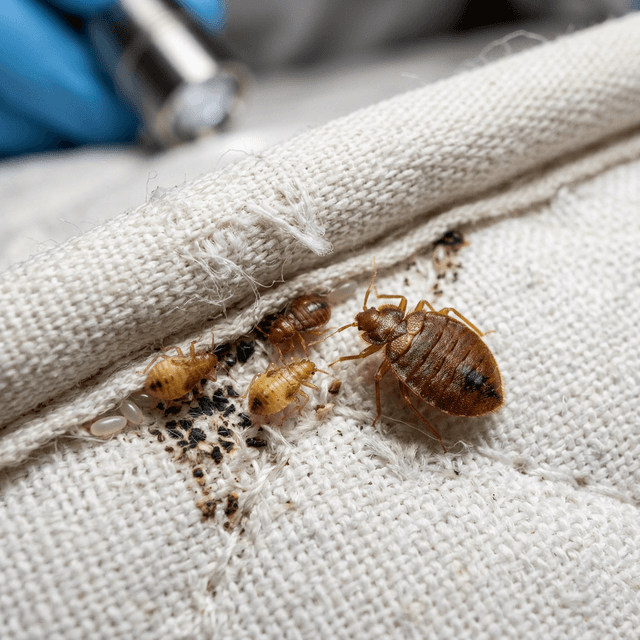
Bed Bugs
Comprehensive research and multi-lingual guidance for identifying, preventing, and preparing for bed bug eradication.
Learn more →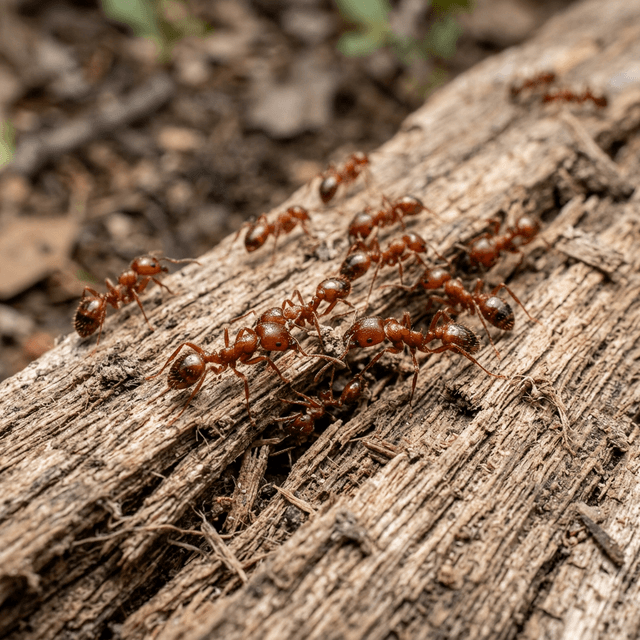
Ants
From pavement ants to carpenter ants, identify ant species and locate nests at their source.
Learn more →
Cockroaches
Identify cockroach species and understand gel baits, IGRs, and sanitation protocols.
Learn more →
Mosquitoes
Larval source reduction and barrier treatment strategies to protect outdoor areas.
Learn more →