
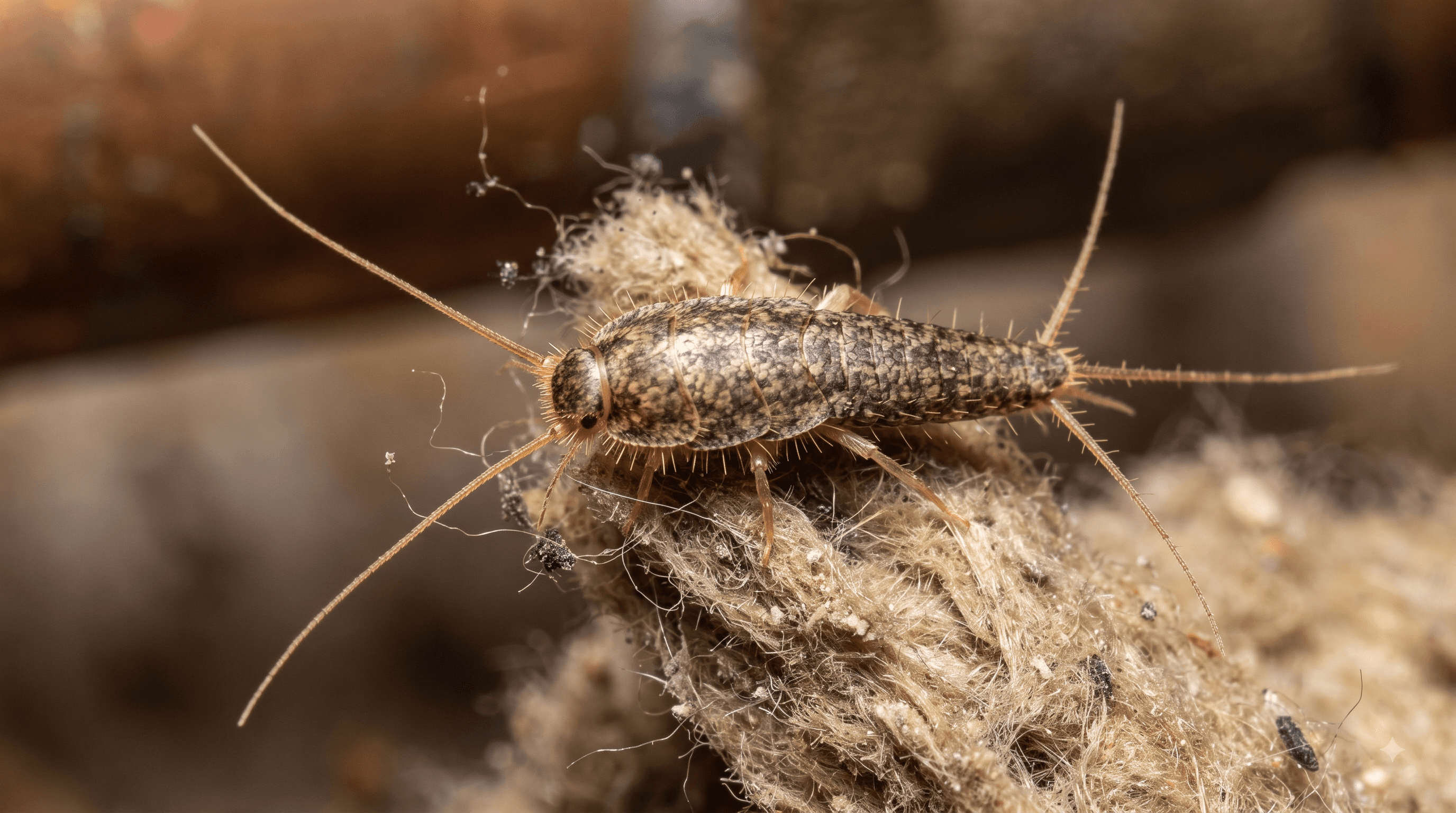
Global identification & prevention guideFirebrats
Thermobia domestica
Comprehensive identification, heat harborage management, and control guide for firebrats.
Overview
Firebrats (Thermobia domestica) are wingless, bristletail insects closely related to silverfish. Unlike silverfish which prefer cool damp places, firebrats thrive in extremely hot environments above 90°F (32°C), such as near boiler rooms, furnace enclosures, ovens, bakeries, and steam pipes. They consume starches, flour, paper products, and book bindings.
Identification
Teardrop-shaped, flattened body approximately 1.5 cm (0.5 inches) long
Mottled grayish-brown body with dark patches and bands across scales
Three long tail-like filaments at the rear and two elongated antennae
Completely wingless with rapid, darting crawling motions
Lack the uniform metallic silver sheen of silverfish
Behavior & Habitat
Firebrats are nocturnal scavengers that seek out high-heat harborage zones near heating elements, water heaters, and steam conduits. They require high ambient temperatures (90°F to 105°F) to reproduce efficiently and feed on carbohydrates, starches, glues, and proteinaceous food scraps.
Warning Signs
- •Feeding damage on paper goods, book bindings, and cardboard near heat sources
- •Yellow fabric stains and notched feeding marks on starched cottons or linens
- •Small dark specks of feces left around furnace rooms or hot water tanks
- •Shed mottled exoskeleton casings near boiler rooms or behind ovens
- •Live insects darting across floors in warm utility rooms when lights turn on
Prevention Tips
- Insulate steam pipes, heating ducts, and hot water heaters to reduce ambient temperature
- Store dry goods, flour, and paper items in rigid, airtight containers
- Vacuum utility rooms, furnace areas, and behind kitchen appliances regularly
- Seal cracks, baseboards, and wall penetrations near heat outlets and boilers
- Keep ambient storage areas cool and well-ventilated
Treatment Approaches
Effective firebrat control requires lowering ambient micro-climate temperatures around heating units, eliminating carbohydrate food sources, sealing structural crevices in utility rooms, and applying targeted crack-and-crevice treatments.
Use this guide safely
- Confirm the insect before treating
- Read product labels
- Keep treatments from children and pets
- Check local regulations
- Monitor after treatment