How Long Do Bed Bugs Live? Understanding the Bed Bug Life Cycle & 7 Stages
Learn how long bed bugs live, understand the 7 stages of bed bugs from egg through 5 nymphal instars, and discover the anatomical difference between male and female bed bugs.
Global Pest Library Research Team
Global Pest Library
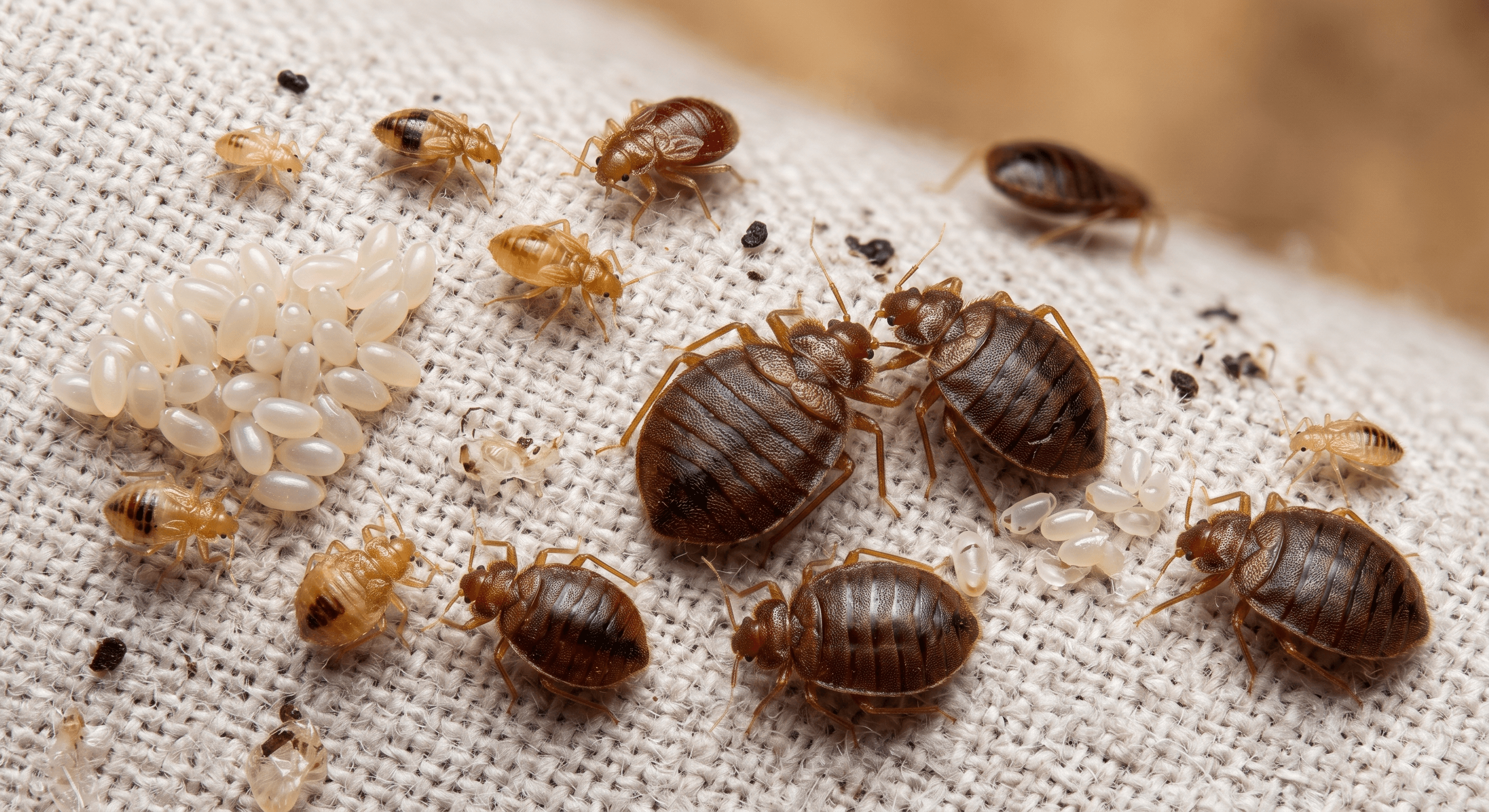
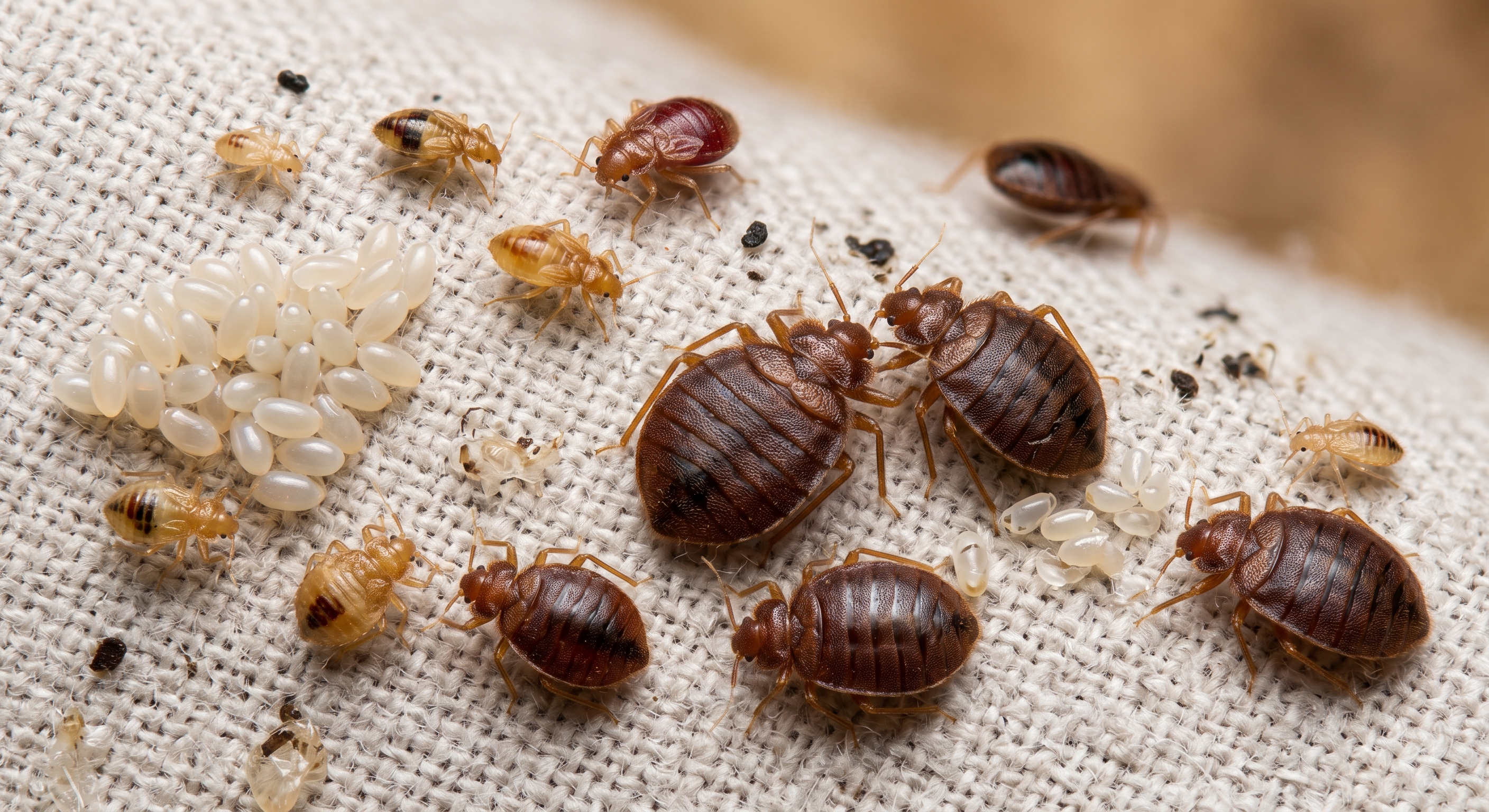
The common bed bug, Cimex lectularius, is a hemipteran insect with a simple metamorphosis. It does not pass through a larval or pupal stage. Instead, it develops through an egg stage followed by five nymphal instars and then the adult stage.
The complete sequence is:
Each nymphal stage requires a blood meal before the insect can successfully molt into the next stage. After the fifth molt, the insect becomes an adult. Adult males and females continue feeding on blood, and females produce eggs after mating and feeding.
Under favorable conditions, C. lectularius can develop from egg to adult in approximately 35 to 37 days. Virginia Tech reports approximately 37 days at optimal temperatures above 72°F (22°C), while laboratory studies have reported approximately 33 to 35 days under particular rearing conditions.
The Seven Developmental Stages
A bed bug's development can be divided into seven biological stages.
| Stage | Developmental State | Key Event |
|---|---|---|
| Egg | Embryonic | Embryo develops inside egg |
| Nymph I | First instar | Feeds and molts |
| Nymph II | Second instar | Feeds and molts |
| Nymph III | Third instar | Feeds and molts |
| Nymph IV | Fourth instar | Feeds and molts |
| Nymph V | Fifth instar | Final nymphal stage; molts to adult |
| Adult | Sexually mature | Feeds, mates and reproduces |
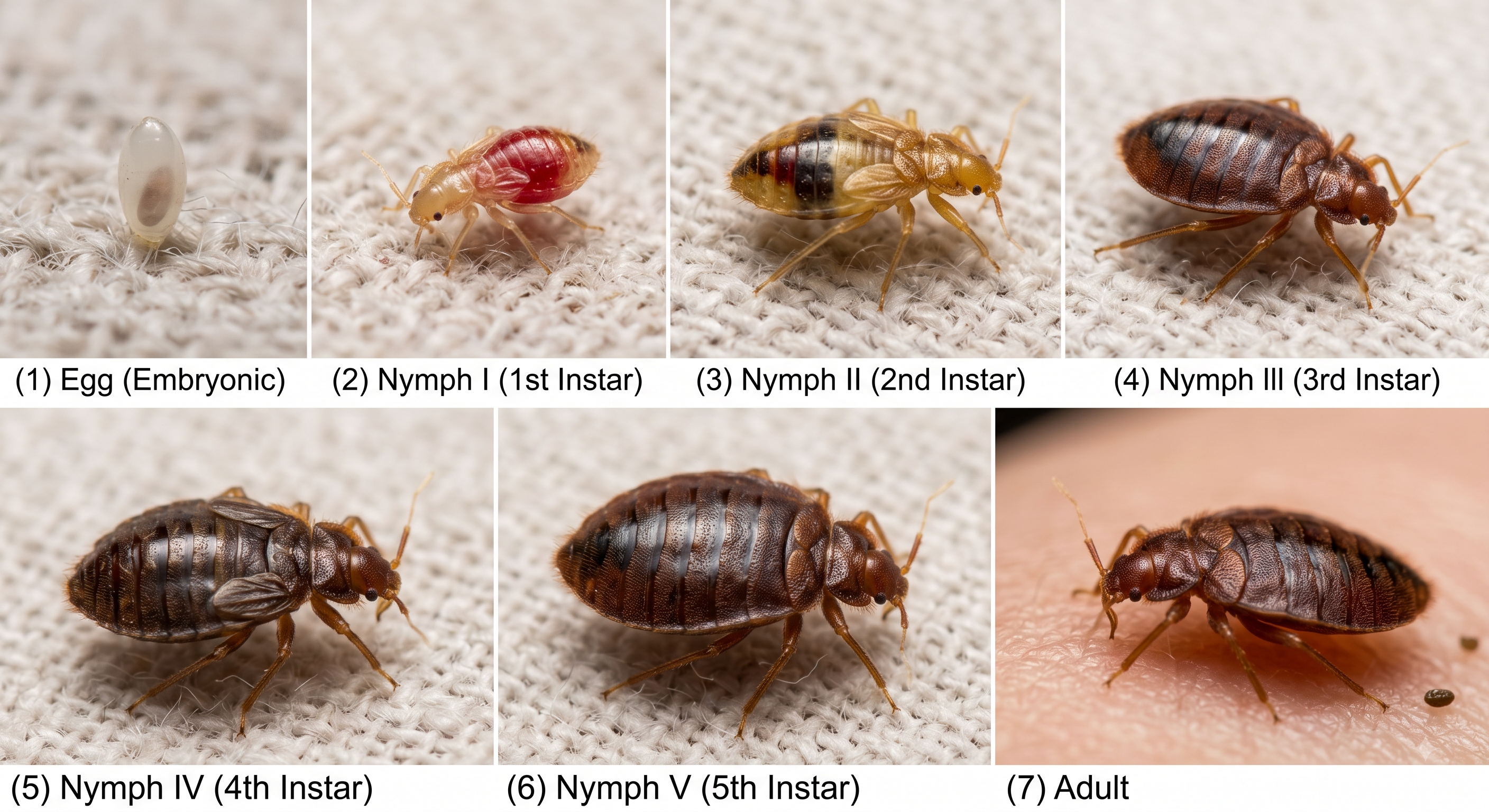
There is no pupal stage. The insect becomes progressively larger through five nymphal instars, with each transition occurring through a molt.
Stage 1: The Egg
A female Cimex lectularius deposits small, pale eggs. A bed bug egg is approximately 1 mm long.
The egg is the embryonic stage. The insect does not feed during this stage.
Under favorable conditions, eggs can hatch in approximately one to two weeks. The exact incubation period is temperature-dependent, so an egg does not have one fixed biological hatching time under all environmental conditions.
Once development is complete, the first-instar nymph emerges.
Stage 2: First-Instar Nymph
The first-instar nymph is the smallest active feeding stage.
It emerges from the egg substantially smaller and paler than an adult. Like every subsequent nymphal stage, it must obtain a blood meal before it can progress to the next stage.
After feeding and completing the physiological requirements for development, it molts its exoskeleton.
That molt produces the second-instar nymph.
Stage 3: Second-Instar Nymph
The second instar is larger than the first.
The insect continues the same basic cycle: Blood meal → growth → molt → next instar.
A nymph cannot simply grow continuously inside its existing exoskeleton. Because the exoskeleton limits expansion, the insect must shed it before entering the next developmental stage.
Stage 4: Third-Instar Nymph
The third instar is an intermediate developmental stage.
The insect is larger than the first- and second-instar nymphs but remains immature.
A further blood meal is required before successful progression to the fourth instar.
Stage 5: Fourth-Instar Nymph
The fourth instar continues the same developmental process.
At this point, the insect is considerably larger than when it emerged from the egg, but it is still not an adult.
Following feeding and sufficient development, it molts into the fifth and final nymphal instar.
Stage 6: Fifth-Instar Nymph
The fifth instar is the final immature stage.
It is the largest nymphal stage and is considerably closer in size and appearance to an adult.
After obtaining the required blood meal and completing development, the fifth-instar nymph undergoes its final molt.
The result is an adult bed bug. Virginia Tech identifies five nymphal developmental stages and states that each immature stage requires a blood meal to develop into the next stage.
Stage 7: Adult Bed Bug
The final molt produces an adult bed bug.
Adult Cimex lectularius are approximately 4 to 5 mm long when unfed, with a flattened, broadly oval body. Feeding causes the abdomen to expand, elongate, and turn a deeper reddish-brown.
Unlike nymphs, adults are sexually mature and reproduce actively when hosts are present.
Difference Between Male and Female Bed Bugs
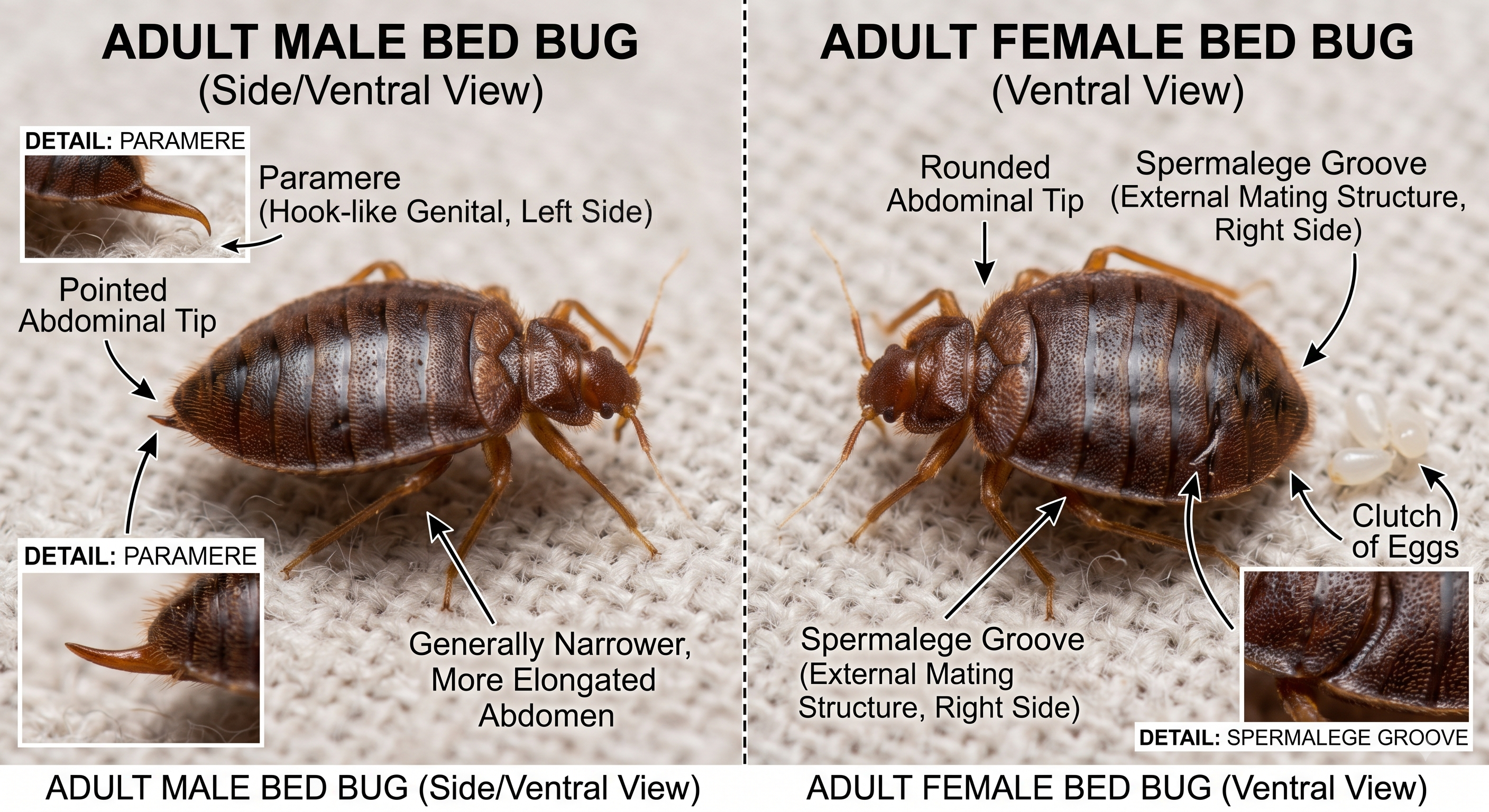
While adult male and female bed bugs share similar coloration and flattened profiles, they exhibit distinct anatomical differences:
- Abdominal Shape: Adult males possess a more pointed, asymmetrical abdomen tapering toward the rear apex where the copulatory organ (paramere) is housed.
- Female Abdominal Anatomy: Adult females feature a wider, distinctly rounded, symmetrical abdomen designed to accommodate internal egg development.
- Ectal Insemination Structure: Females possess a specialized groove-like copulatory organ on the right underside of the abdomen called the Organ of Berlese (spermalege).
- Feeding & Reproduction: Both sexes consume blood meals; however, mated females require regular feedings to sustain continuous oviposition (laying 1 to 5 eggs per day).
How Many Blood Meals Are Required?
A developing nymph generally requires at least one adequate blood meal during each nymphal instar to progress to the next stage.
Historical developmental studies describe six substantial blood meals as generally sufficient for development from hatching to adulthood, although feeding requirements can vary and inadequate meals can prolong an instar.
How Long Does It Take to Become an Adult?
At favorable temperatures, Cimex lectularius can complete development from egg to adult in approximately five weeks.
A commonly cited laboratory value is approximately 37 days under optimal temperatures above 22°C (72°F). Other laboratory populations have completed development in approximately 33 to 35 days under controlled conditions.
Temperature has a major effect on this timeline. Published biological references report development taking approximately 24 days at 30°C (86°F), compared with approximately 128 days at 18°C (64.4°F). These figures demonstrate why there is no scientifically valid single exact number of days that applies to every environment.
The important distinction: Approximately 5 weeks under favorable conditions does not mean every bed bug reaches adulthood in exactly 5 weeks.
Temperature and Bed Bug Development
Temperature changes the rate of development rather than simply determining whether a bed bug is alive or dead.
For Cimex lectularius, the approximate developmental threshold is around 15°C (59°F). Below the developmental threshold, normal development does not proceed at the same rate as it does under favorable conditions. Development becomes progressively faster as temperature rises through the suitable range, reaching a high developmental rate around the upper 20s to approximately 30°C.
At 30°C (86°F), published data indicate development from egg to adult can occur in approximately 24 days. At 18°C (64.4°F), the same developmental process can take approximately 128 days.
What Temperature Kills Bed Bugs?
This question requires a distinction between lethal body temperature and treatment temperature.
EPA states that common bed bugs can remain active at temperatures as low as approximately 7°C (46°F), but die when their body temperature reaches approximately 45°C (113°F).
However, reaching 45°C in the air around a room is not the same as bringing every bed bug and egg to 45°C.
A mattress, piece of furniture, suitcase, wall cavity, or pile of clothing can contain cooler areas. Those areas may remain below the lethal temperature even when the surrounding air is hotter.
Therefore, professional heat treatment uses a higher environmental temperature and sufficient exposure time to ensure that hidden locations reach lethal conditions.
Heat Treatment: Temperature and Exposure Time
Published heat-treatment data demonstrate that temperature and exposure time work together.
Cornell's bed bug heat-treatment table reports the following exposure relationships:
| Temperature | Adult Mortality | Egg Mortality |
|---|---|---|
| 113°F (45°C) | 90 minutes | 8 hours |
| 118°F (47.8°C) | 2 minutes | 90 minutes |
| 122°F (50°C) | Immediate | Immediate |
These are controlled exposure figures, not instructions to heat an entire home to those temperatures without professional equipment.
For practical whole-item or structural treatment, EPA recommends heating infested articles or areas to at least 120°F (49°C) for 90 minutes to ensure that eggs are killed.
What Temperature Is Too Cold for Bed Bugs?
Cold affects bed bugs differently from heat. Bed bugs can remain active at temperatures substantially below normal indoor temperatures, and cooling does not immediately kill them.
EPA notes that cold treatment can kill bed bugs but warns that this method requires appropriate temperatures and sufficient exposure time. Bed bugs can become dormant and later become active again when warmed if the cold exposure was insufficient.
Therefore, there is no useful rule such as putting a mattress in a cold room to kill bed bugs. For controlled freezing of smaller objects, the entire object must reach the required temperature for the required duration.
How Long Can Bed Bugs Live?
Adult Cimex lectularius can live for many months under favorable conditions. Virginia Tech reports a life span approaching one year under favorable temperatures and regular access to blood meals.
Laboratory life-table research has also measured life expectancy from the egg stage at approximately 207 to 208 days in particular bed bug populations maintained under defined experimental conditions.
These figures should not be interpreted as a universal maximum lifespan. Lifespan changes with temperature, feeding conditions, population genetics, and laboratory or environmental conditions.
How Long Can Bed Bugs Live Without Feeding?
Bed bugs are capable of surviving prolonged periods without a blood meal. The duration depends strongly on temperature and developmental stage.
Lower temperatures can substantially extend survival because metabolism slows. Research summarized in biological references reports that nymphs can survive for approximately five to six months without feeding under low-temperature conditions, with adults capable of surviving longer under some conditions.
This does not mean that bed bugs can routinely survive for a fixed number of months in every empty room. A statement such as bed bugs dying after X months without feeding is biologically misleading unless temperature, humidity, developmental stage, and experimental conditions are specified.
How Fast Can Bed Bugs Reproduce?
Reproduction begins after adulthood. A female must mate and obtain blood meals before producing eggs. Once reproductive conditions are met, she can deposit eggs over time rather than producing an entire generation simultaneously.
Because development from egg to adult can occur in roughly five weeks under favorable conditions, new reproductive adults can appear while older adults are still alive, creating overlapping generations.
Why Bed Bug Populations Do Not Develop All at Once
Bed bugs do not hatch, mature, and reproduce as one synchronized generation. Eggs are deposited at different times, and each egg develops according to its own temperature and feeding conditions.
As a result, a room can contain insects separated by weeks or months in biological age. This is why finding adult bed bugs does not tell you how old the entire infestation is.
The Bed Bug Life Cycle in Numbers
| Biological Characteristic | Approximate Value |
|---|---|
| Number of nymphal instars | 5 |
| Egg length | ~1 mm |
| Adult length | ~4–5 mm |
| Egg-to-adult development under favorable conditions | ~33–37 days |
| Egg-to-adult development at 30°C | ~24 days |
| Egg-to-adult development at 18°C | ~128 days |
| Approximate developmental threshold | ~15°C |
| Lethal body temperature reported by EPA | ~45°C / 113°F |
| EPA whole-area/item heat target | ≥49°C / 120°F for 90 minutes |
| Adult lifespan under favorable conditions | Several months; potentially ~1 year |
| Blood meal required for each nymphal transition | Yes |
What the Life Cycle Tells Us
The biology of Cimex lectularius is straightforward: A female produces eggs, which hatch into first-instar nymphs. The nymph feeds and molts five times. The fifth instar molts into an adult, and adults feed, mate, and reproduce.
For identification photos and physical traits of Cimex lectularius, see our Bed Bug identification and prevention guide.
If you need to determine whether an insect or room contains bed bugs, see our guide on how to check for bed bugs.
For treatment methods and when professional treatment becomes appropriate, see our guide on how to get rid of bed bugs.
Explore Pest Identification Guides
Global Pest Library provides independent, evidence-based research articles to help you identify household pests and understand safety protocols.
Explore Our Pest Library
Identify household pests and learn about evidence-based prevention options.
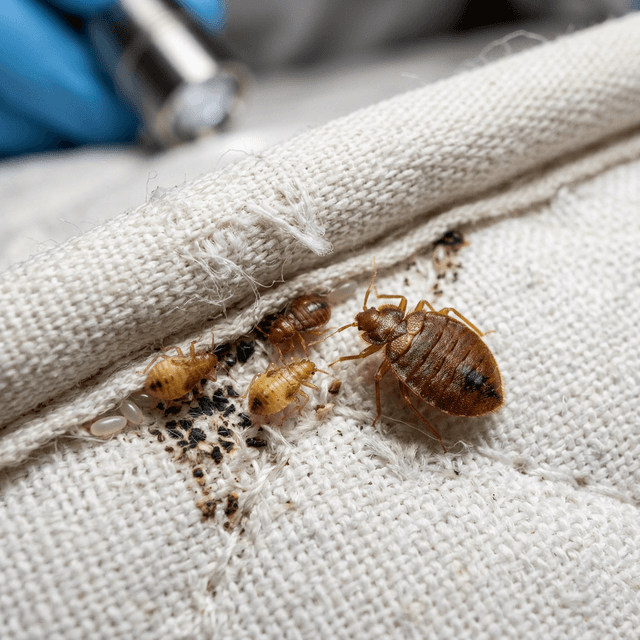
Bed Bugs
Comprehensive research and multi-lingual guidance for identifying, preventing, and preparing for bed bug eradication.
Learn more →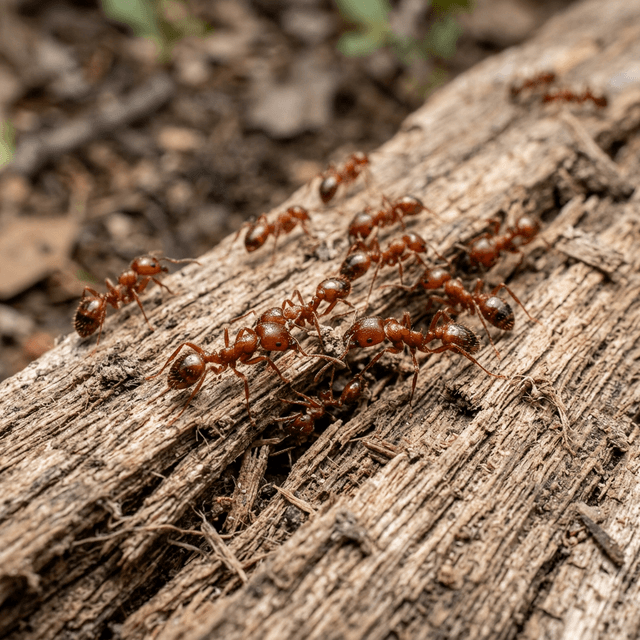
Ants
From pavement ants to carpenter ants, identify ant species and locate nests at their source.
Learn more →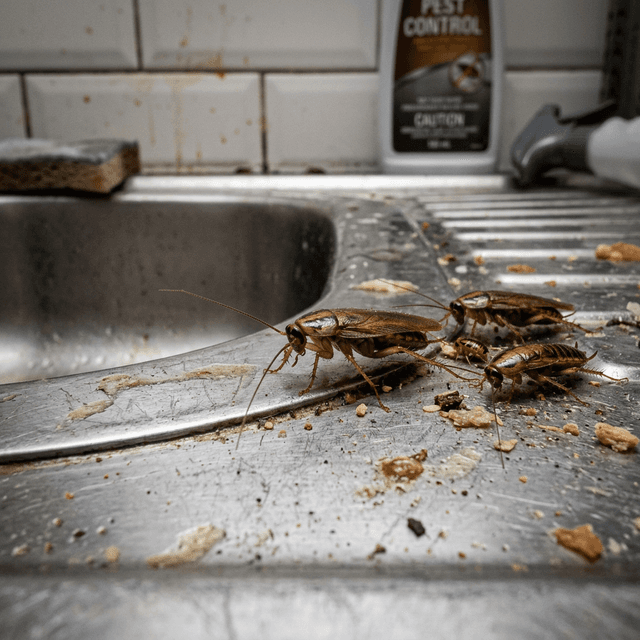
Cockroaches
Identify cockroach species and understand gel baits, IGRs, and sanitation protocols.
Learn more →
Mosquitoes
Larval source reduction and barrier treatment strategies to protect outdoor areas.
Learn more →