
Global identification & prevention guideSilverfish
Lepisma saccharinum
Comprehensive identification, moisture reduction, and prevention guide for silverfish.
Overview
Silverfish are wingless, nocturnal insects covered in metallic silvery scales that consume carbohydrates, starches, and cellulose. They thrive in humid household environments, damaging book bindings, wallpaper, starched clothing, pantry goods, and cardboard storage boxes.
Identification
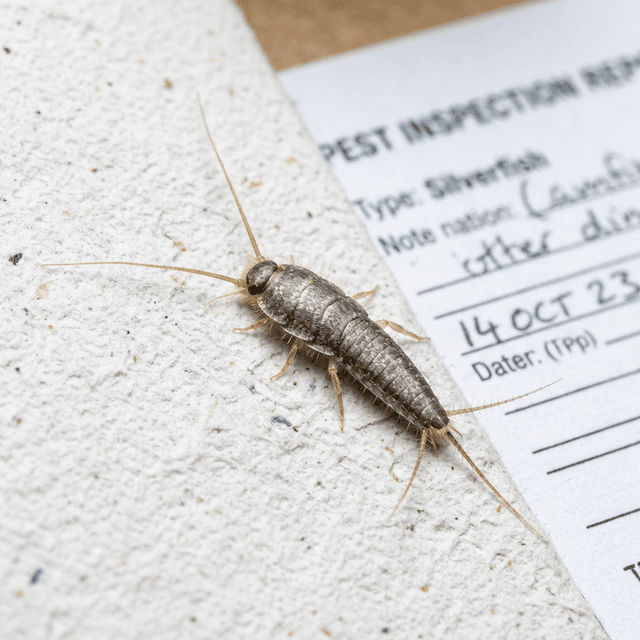
Teardrop-shaped body, 12 to 19 mm long, tapering smoothly toward the tail
Covered in silvery-gray metallic scales with a distinct shimmering sheen
Three long bristle-like appendages at the tail and two long antennae
Completely wingless with rapid, wriggling fish-like crawling movements
Soft, flattened body that easily slips into narrow cracks and crevices
Behavior & Habitat
Silverfish thrive in dark, humid environments with relative humidity above 75%, including basements, attics, bathrooms, and laundry rooms. They feed on sugars, glues, book bindings, and pantry starch, hiding in dark voids during the day.
Warning Signs
- •Irregular feeding notches and small holes in wallpaper, books, and paper items
- •Yellowish stains and feeding damage on stored cotton, linen, or silk fabrics
- •Tiny black pepper-like droppings left in cardboard storage boxes and drawers
- •Shed silvery scales left behind on shelves, pantry surfaces, or floor trim
- •Live silverfish spotted scurrying across floors or trapped in sinks and bathtubs
Prevention Tips
- Run dehumidifiers to maintain indoor relative humidity levels below 50%
- Repair leaky bathroom and basement plumbing fixtures to eliminate excess moisture
- Store paper goods, books, and dry pantry staples in airtight plastic containers
- Seal cracks and gaps along baseboards, drywall joints, and cabinet backings
- Remove cardboard storage boxes and paper clutter from closets and basements
Treatment Approaches
Effective silverfish control combines environmental dehumidification, removal of starch and cellulose food sources, sealing structural crevices, and targeted crack-and-crevice treatments in high-moisture harborage zones.
Use this guide safely
- Confirm the insect before treating
- Read product labels
- Keep treatments from children and pets
- Check local regulations
- Monitor after treatment