Global identification & prevention guideStinging Insects
Hymenoptera
Identify paper wasps, yellowjackets, hornets, and carpenter bees safely.
Overview
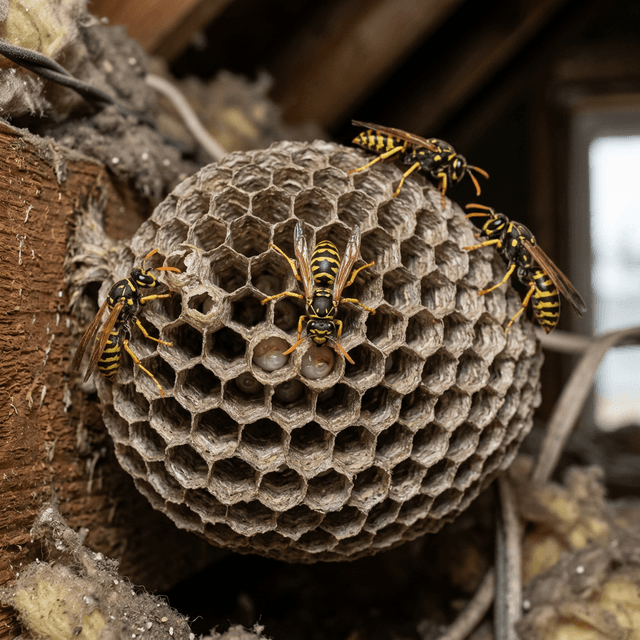
Yellowjackets, wasps, hornets, and carpenter bees construct nests in eaves, ground voids, and tree structures. They sting defensively when nests are approached.
Identification
Yellowjackets: black and bright yellow stripes, fast fliers
Paper wasps: slender body with long legs, umbrella-shaped paper nests
Bald-faced hornets: black body with white facial markings, large aerial nests
Carpenter bees: resemble bumblebees but have a shiny black abdomen
Mud daubers: thin waist, construct tubular mud nests on walls
Behavior & Habitat
Social stinging insects defend nests aggressively, especially late in summer when colony populations peak. Carpenter bees bore clean round holes in exterior wood to lay eggs.
Warning Signs
- •Visible paper or mud nests beneath eaves, decks, or trees
- •Frequent insect flight paths entering wall gaps or ground holes
- •Perfectly round 1/2-inch holes drilled into exposed wooden trim
- •Aggressive buzzing activity near garbage bins or outdoor dining
- •Dying wasps found indoors near windows
Prevention Tips
- Inspect roof soffits and eaves early in spring for new nests
- Seal gaps in exterior siding, window trim, and utility openings
- Keep outdoor trash containers covered with tight lids
- Paint or stain exposed exterior wood to deter carpenter bees
- Avoid leaving sweet drinks or meat uncovered outdoors
Treatment Approaches
Stinging insect treatment involves targeted dust or liquid application directly into nest openings followed by nest removal once activity ceases.
Use this guide safely
- Confirm the insect before treating
- Read product labels
- Keep treatments from children and pets
- Check local regulations
- Monitor after treatment